(No reproduction of this material can be used without permission)
In this final part of Alexander’s diary, he has arrived in Boston after his first voyage as a ship’s surgeon. He is in America for the first time and has much to write about as he compares Boston to his hometown Glasgow. He tours the city with an expat veterinarian, samples the beer and rye whiskey, and meets an influential law professor at Harvard. Then after returning to Scotland he takes a voyage to Iceland. His story is an amazing adventure and he has “the sight of a lifetime”. He writes many pages describing the grandeur before him, his climb of a volcano, the hospitable Icelandic people, and a close encounter with a whale!
“In Harbour – Boston
Friday 8th,
I went up town with the Purser. I handed in my report to the office. We afterwards had a look round the town, and sampled the lager and rye whiskey. This latter I found to be exceedingly good when got good but like our own Scotch there is an immense quantity of bad. It has a peculiar flavour and can be drunk raw far more easily than Scotch indeed, such is their method here. The bottle is set down to you with 2 small tumber-like glasses, one filled with water. You take what you wish of the Whiskey, drink it next and follow with the water. I of course could not do this but kept to my old principles of free dilution. With regard to beer you pay 5 cents and can have a variety of quantity. You may have a small tumbler called a “Pony” a “glass” or a “schooner.” This last being about a pint, of course when with a number you have to take “ponies”. Then again after a number of rounds the barman stands a drink or hands round a box of cigars. I can hardly describe my first impressions of the town. It struck me at once as being more of an English than a Scotch city. Brick and wood are principally used in the construction of the houses. Most of the poorer houses are of wood but even many of the larger are of the same material and especially in the suburbs. The noise of the city was much greater than that of Glasgow owing principally to the railways intersecting streets especially near the docks. The engines have large bells attached to them which are kept constantly going. Large upright beams come down from either side of the roadway and bar the street. These are let fall and are raised on a leverage principally by what means I forget. The traffic on the streets is very great, wagons, buggies and carriages, all on light wheels. In driving there is no one side of the street but in passing, the system is the opposite of ours, viz keep to the right. This is the same with the railway trains. There is no question about the streets, they are infernally bad and this is the same in any American cities I have been in. They are full of ruts and holes and are badly scavengered and badly drained. I have seen the main streets of Boston, Tremont and Washington running like rivers in a few minutes after a shower came on. The people do not seem to expend their money much in this way.“
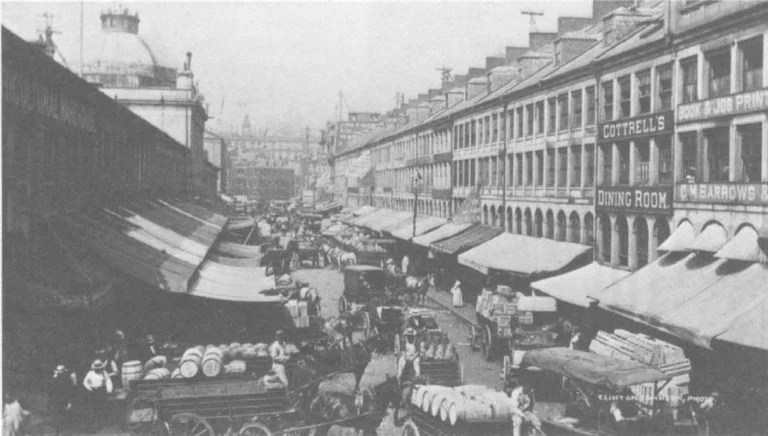
Quincy Market, North Market Street, looking toward Faneuil Hall Square, 1880s. Courtesy of Bostonian Society.
“In driving round with Dr. Bryden, the buggy used to get in below the rails and the causeway and the holes of the latter itself and then pump out with a great swing and a jerk. Our own heavy carriages would be shattered by such treatment. There is no city that I have seen or heard of where the streets are laid off in such a confused way as in Boston. I never could find my way without the greatest amount of trouble. Nor can the police or even the natives themselves direct one. They do not seem to know their own city. With regard to buildings these did not strike me much, in fact I was disappointed all over this perfect city. Perfect because the natives believe there is no place like it in the world and they would laugh if you told them that Glasgow e.g. (he means for example) had finer public buildings or would be ashamed of the condition of the streets.”
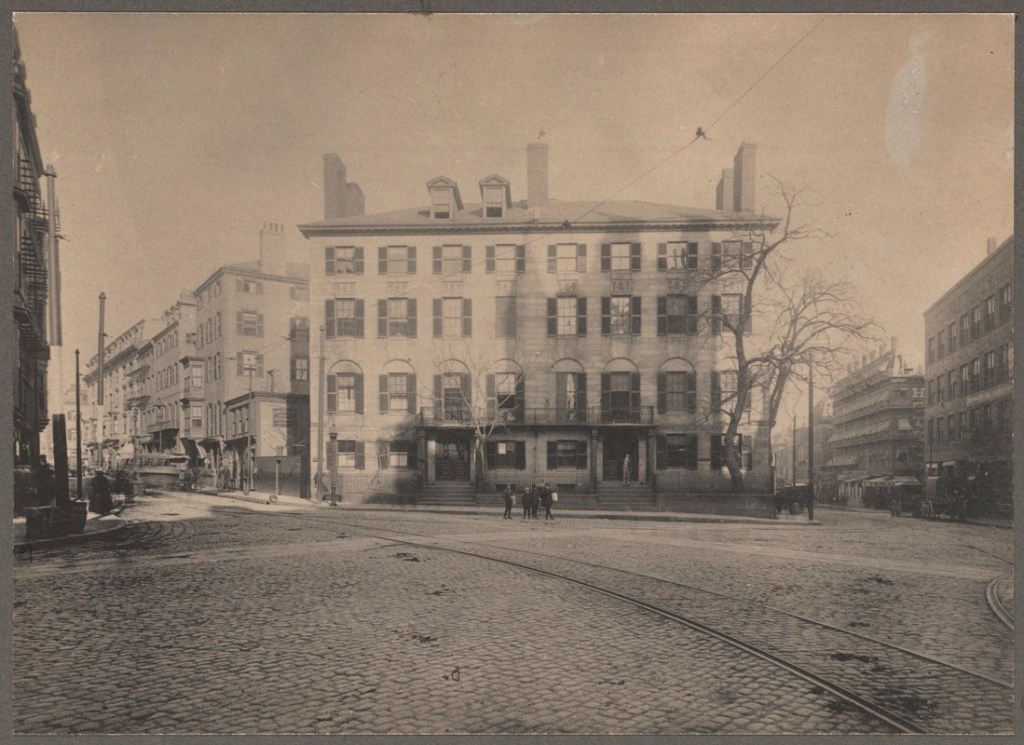
Boston, Massachusetts. Bowdoin Square in 1880, showing Parkman House. Built about 1816 Courtesy of the Digital Commonwealth Massachusetts Collections on line website.
“What I was pleased with were the suburbs. These are very fine and very extensive. They are well planted with trees and look fresh and green and leafy. The houses moreover are very neat and clean. The residential part of the city is the finest part of it. The streets are here wide and airy with plenty of grass in front and the houses are very fine. One thing I liked about the houses was the doorways. These are made of fine woods and are beautifully made. They strike one at once accustomed to our own plain fronts. I saw most of the places of interest and all the principal streets both in the city and in the residential part with Dr. Bryden, a Dumfrie’s veterinary surgeon who came out about 15 or 16 years ago. He has been very successful and is I understand one of the best vets in the states. He is a large, fair, florid man. He is inspects of the cattle that come by our ships and always calls down and takes the surgeon out drives with him. He is exceedingly kind, constantly standing treat in the best places and even dinner and scowls every suggestion of your taking your turn. I have seldom met a more man unselfish man. He is intensely Scotch and enjoys nothing more than to get hold of someone from the old country and imprison him in his buggy. We got along famously. But I have drifted off, Friday in the evening the Purser, Charles and I took car for the Revere Beach. This is about 6 miles off but no matter what distance you go you always pay the same car fare, 5 cents. The Reviere is a favorite resort in summer, a band plays there and people promenade. You can also have oyster and fish suppers and unlimited lush _____” (he’s left a blank space). On Saturday Dr. Bryden called down for me and drove me out in his buggy and showed me all over the place as I have mentioned.”
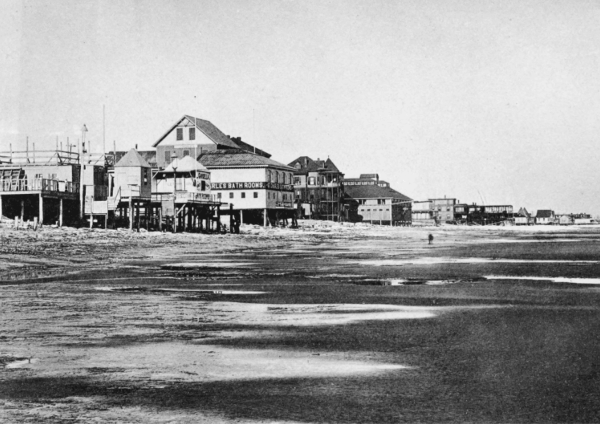
Photo of Revere in 1892. Courtesy of Revere Beach website.
“Sunday 10th,
Had an invitation to dine at Harvard with Prof. Langdell, whose wife is a relation of Miss Jones, a passenger previously mentioned, of course I was delighted with this invitation as Harvard was one of the places I particularly wished to see. Dinner was for 1.30 but I did not get our until after 2, having taken the wrong car. I took an East Cambridge instead of Cambridge. I had to wait for one back. Then I had to walk God knows how far till I got to the place and here I waited for half an hour as there were no numbers on the houses….”
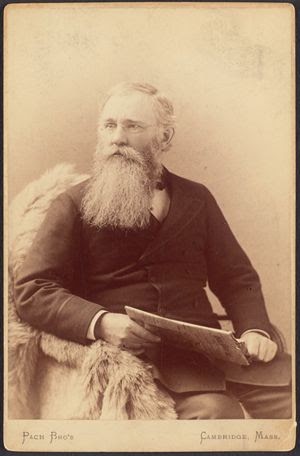
SIDE NOTE:
(Professor Langdell and his very young wife: Langdell was 54 when he married 24 year old Margaret Ellen Huson in 1880. Christopher Columbus Langdell (May 22, 1826 – July 6, 1906) was an American jurist and legal academic who was Dean of Harvard Law School from 1870 to 1895. Dean Langdell’s legacy lies in the educational and administrative reforms he made to Harvard Law School, a task he was entrusted with by President Charles Eliot. Before Langdell’s tenure the study of law was a rather technical pursuit in which students were simply told what the law is. Langdell applied the principles of pragmatism to the teaching of law as a result of which students were compelled to use their own reasoning powers to understand how the law might apply in a given case. This dialectical process came to be called the case method and has been the primary method of pedagogy at American law schools ever since. The case method has since been adopted and improved upon by schools in other disciplines, such as business, public policy, and education. This innovation, coupled with Langdell’s introduction of strictly meritocratic principles into the evaluation of candidates, has led him to be considered “arguably the most influential teacher in the history of professional education in the United States”. Now back to the diary quotes.)
“I was in a savage temper by the time I got out. I found them just finishing their meal but I tucked in and ate heartily and had one and a half bottles of cider. I would much rather have had English beer but then I wasn’t offered it. The Professor was an old chap (Mrs. Langdell is young and handsome) and seemed to me rather stupid i.e. in general. He did not at any rate know much of our country. He was quite surprised when I informed him on inquiry that Glasgow had a population of 750,000. He was somewhat interested in the faculty of advocates but did not know much about them. After dinner Mrs. Langdell, Miss Jones and Mrs. Langdell’s mother took me out a stroll. We walked round the colleges, calling in at the Law College to which Mr. Langdell is attached. Passing through to the various residences &/c. there is no walling in here, not even a fence round. All the buildings are set as it were on bare and open ground with some trees and plenty grass about. It did not strike me as a very good arrangement however. There was some of that quiet privacy which one associates with study. For my own part I like walled in places with edifice arches and big gates whose very aspect speaks seclusion and exclusion. There is a very becoming feeling of dignified quiet about them and a suggestion of unworldliness which to me at least is exceedingly pleasant. Here at “Old Harvard” however (as Americans delight to call it) there is no such suggestiveness. The buildings however are fairly good but not at all extraordinary. On the whole I enjoyed my visit very much.“
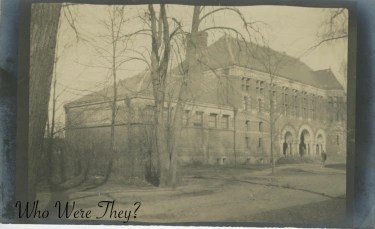
Austin Hall, Harvard Courtesy of Who Were They? website
“Monday, 11th,
Wandered around the town looking over the book shops &c in Washington St. and in Tremont St. Visited the old State House in State St. It has the old English aspect. Here I saw portraits of all the men famous in the time of the revolution and many men of note in the history of the country. Also a copy of the Declaration of Independence and other famous documents and relics.“

The Old State House around 1898. Photo courtesy of Boston Public Library.
“In the evening I called out with the Purser at the Murdoch’s in Pierce Av. Dorchester. Miss M. and her brother were down at the boat in the afternoon but I missed them. They however saw me as I came in the car and the Purser came back for me. Their house is about 6 miles off right away in the suburbs and very nicely situated. We spent a most enjoyable evening. When we left the Ch. (Chief) steward took the guidance of the party to Ashmount Station but alas he took us all wrong. We wandered down a private Avenue instead of the right road and got in among stables with barking dogs who frightened us rather. Finally we got out on the road and the Steward took us in just the opposite direction as we fortunately discovered before long neither the Purser nor I having much faith in him. There was some tall language used but we finally got to the station in time for the last train. When we alighted from the train at Old Colony Station we had a good time for a little with beer and sandwiches and then to the boat.“
Tuesday 12th,
“Went out again with Bryden. In afternoon bought a few books and strolled around and then in evening went to say goodbye to the Murdoch’s. Had a fine time this night. Ch. Steward came out afterwards and started singing Scotch songs. The whiskey was brought out and passed round liberally and after a glass or 2, I got my voice loosened and joined in full chorus, giving as solos “Willie Brewed” and “Sae Bring to me a Pint of Wine.” I felt quite depressed as I usually am with Scotch music and yet enjoying myself immensely. We left for the last train after mutual expressions of goodwill and Auld Lang Syne and with very strong invitations to come back. When we got out we had another good time and walked down all the way to the ship singing our trio of “Duncan Grey” in magnificent style varied by “Larbored Watch.” I have not doubt we startled some people. One policeman in Washington St. waved his paton (baton?) over his head as we came along and laughed. There was no doubt of his nationality. Another nearer the decks was not so polite. He told us if we did not stop our row he would very quickly run us in. He was no doubt an Irishman. We pitied him but sang pianissimos for a block or 2. It is not much fun having 5 dollars to pay out of a morning.
Wednesday 13th,
Bought a bottle of whiskey this morning for which I payed 1 ¼ dollar, also my chair one dollar. Met Bryden at ship and went out with him in search of a quiet place. Did not get it but went to Tom Lowlles. Bryden was much amused at me when I told him I had got some good whiskey for own use but wanted a bottle of common shelf for the engineers and officers. Met the Captain of the Warren ship here and went on board with him. Had some more whiskey. Came on board in time for sailing. Sailed about midday. Went to sleep in my new chair.“
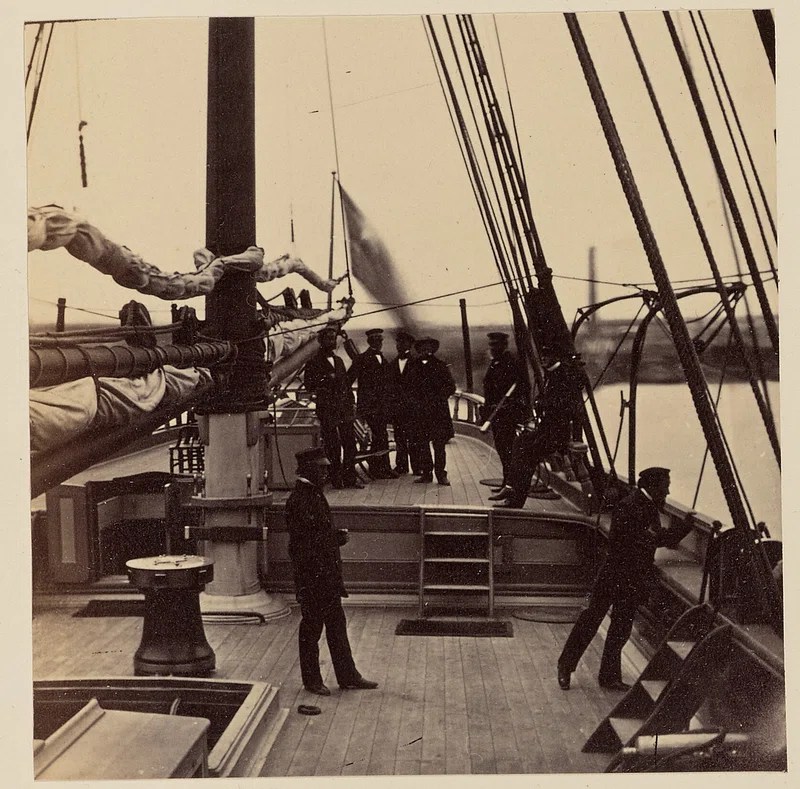
Photo courtesy of Rawpixel website
“Homeward Voyage. Was quite uneventful. We had splendid weather and I passed most of my time sitting on deck in my chair reading. We had a good view of the North of Ireland from Tory (Tory Island in Ireland) but passed Cantyre and Arron at night. I would not go to bed however without seeing Goatfell (A mountain in Scotland) which I sighted about 2 a.m. and turned in. Arrived Greenock Tuesday.
26th June.
Very warm forenoon, borrowed a suit of pajamas from Kerr the 3rd officer and went over the side for a bath, enjoyed it immensely. Got up to Glasgow in afternoon and stopped at Yorkhill to discharge cattle.
“Home. Altogether have enjoyed the voyage immensely and have come home almost as black as a nig—r (he spells it out but I choose not to here). My hands especially are strikingly brown and I can hardly help laughing at them when I take a bath. And now what to do next. I did not want to go back to Boston and if I waited for another ship I would not make the trip across the Atlantic and back in time to take father’s practice in August which I intended to do. The difficulty was solved on Wednesday when I went down for my pay, the first by the bye that I had ever lifted. At the office they offered me a trip Iceland. I was to go up as passenger and be surgeon for a number of emigrants who were to be brought down. No pay but a trip worth having they said. Needless to say I accepted at once. Visited the Royal on Thursday morning, met my chief coming down High St. Tells me about a book by Lord Dufferin, “Letter from High Latitudes.”
(SIDE NOTE: “Letters From High Latitudes” is a travel book written by Lord Dufferin in 1856, recounting the young lord’s journey to Iceland, Jan Mayen and Spitzbergen in the schooner Foam. When Dufferin was only 15 his father died. In consequence he developed a very close relationship with his mother. In the course of the voyage Dufferin created a diary in the form of letters nominally written to his mother. On his return, Lord Dufferin used those letters to write a book about his travels entitled Letters From High Latitudes.)

“He (his chief) was coming away early this morning but advised me to go in to Dunlop’s and see him tie the Carotid and Subcalvian at same time for Aneurysm. Saw this operation and then went upstairs to own wards and found Barney dressing with Nurse McDonald. After a while in looking out of the window with latter saw Nurse McGee in doorway of corridor in bright summer costume. Then she and Nurse Anderson went out. We crossed the ward and saw them pass up Castle St. Nurse McDonald of course shouted out but though we saw they were conscious of this, they never turned. Shortly after I followed them out and came up with them on Alexandria Shade (?) where I use often to walk out when I was in Hospital. We had a nice long walk and a talk. They could not keep from looking at my face and hands, they were so brown and Nurse McGee remarked that I was no longer “the Anaemie” and laughed very much at me. They were forced even to go in again. I told them that I was gong North to Iceland to harpoon whales so that I might come home and perform on the cat with a table fork. (Came back to Hospital again in evening and took along a bottle of whiskey knowing that this set was not as ours) I was very nearly putting in a symposium here which happened not now but when I came back from Iceland. I was merely writing from memory. I had better perhaps say no more about this interval but get on to my 2nd voyage of which I have a diary. I may however enlarge the notes a little. One thing is tolerably certain that I would go back to the hospital to say goodbye to “nothing at all.” I had only a day or 2 to prepare as the ship was to leave Granton on the Friday. My things however were all ready, including 2 doz. new collars and a doz new shirts which had been late for the Phoenician and which caused a deal of tall language. No wonder if anything irritates me more than another it is being disappointed in clothes or such articles coming. I could find it in my heart to confess the death of the offending individual, however strike out, old man, and get along.”
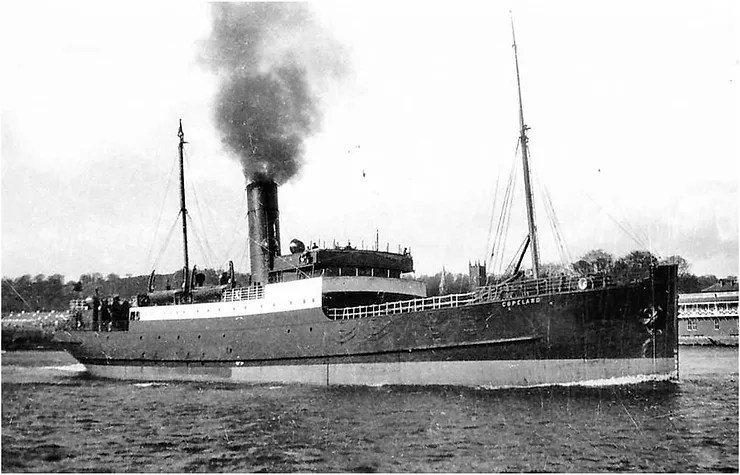
Photo of S.S. Copeland courtesy of Icelandic Roots Website
“Voyage to Iceland. S. S. Copeland. Capt. Thomson.
Sailed from Granton Friday 29th June 1888. We got away about 6 P.M. and had dinner as soon as we cleared the wharf. In the usual method of describing voyages I ought to say “And here I had a chance of studying my fellow passengers” and then they go on to describe who sat opposite and round about, what parsons were there and the probable occupation of the rest all t_____ (can’t quite make out this word darn it) up no doubt out of their subsequent experience of them. I may need not bother about occupation &c. We had one parson, Church of England, named Darley but when I came on board I found him in a short tweed jacket juggling a potato he had picked up. He had a brother with him going out to join a Major General Edwards at the salmon fishing. Indeed all the passengers, about 16, were English gentlemen going to Iceland for the salmon fishing with exception of 2 French officers going on a photographing expedition. These latter were exceedingly tall, thin and fair reminding me of Espies objection to worms that they were too long for their breadth and moreover were damp. The Frenchmen however were very clean looking men and dampness was only from the inside from beer. There were further, Sir Wm. Williams next whom I sat at dinner and his younger brother. Both exceedingly nice fellows. I spent my time mostly with them and did not know that the older was a baronet until near our arrival. Also two brothers Cross with whom I made good friends. They seemed to be people of very good rank as they had letters from Lord Salisbury to Danish minister at Copenhagen and thence to the Governor of Iceland. Then there were some Loaders from Grosvenor Square and a lot of others. The Captain of the ship I found to be an exceedingly good sort, fond of a chat and a smoke. From the office came Frances of whom more anon and Eymundson the Icelander as interpreter and agent.“

“The arrangements of this ship I found to be very different from those of the Phoenician. She was essentially a saloon passenger ship and every arrangement was made for the comfort of the passengers. Our meals were 8-30 Breakfast, Lunch at 1 and dinner at 6. The table moreover was excellent and well served and you could order what liquor you choose and keep your bottle on the rack. But you could order at any time anything you pleased such as beef tea, &c. The weather after getting away was very rough and on Saturday only about 4 appeared at table. I am happy to say I was one, indeed I did not miss any meal except one days lunch. The people did not begin to come out till about Monday.”
“Tuesday, 3rd, July,
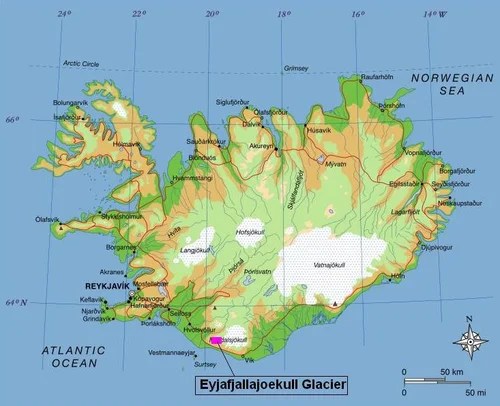
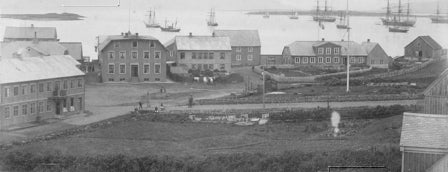
Arrived at Vestmannaeyjar on the Westman Islands. There is some tradition that the people came originally from Ireland but it is more probable that the story did. When I came on deck I saw a most delightful scene. Right away in front was the bay with a volcano of perfect shape as a background. In the center foreground the houses and church were situated while high ridges ran away to the right and on the left a high steep grassy hill swarming with birds and dotted here and there with sheep which appeared as moving white specks. In the immediate foreground standing up out of the water and to the right were some curiously shaped blocks of rock. One of them high, and built up just like a block of masonry with a grassy top. It was quite square in shape. I am sorry I cannot sketch else I might put down some suggestions of the view. However a few lines taken from my memory will serve to remind.“
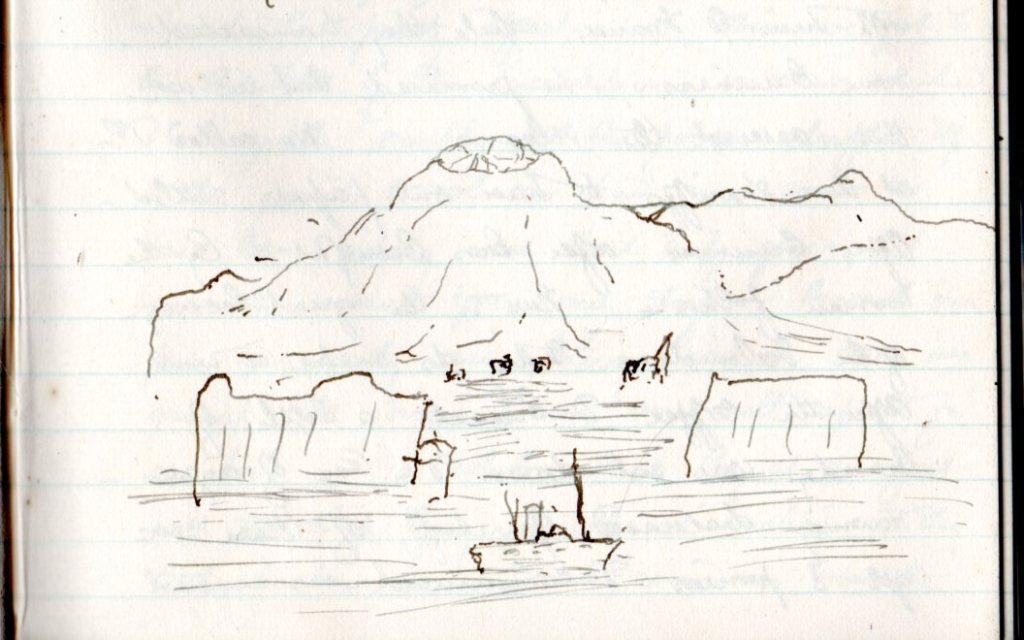
“At this place we had to discharge a good lot of cargo, flour, coals &c. The men filled large open rowing boats with bags. When these were rowed close in shore the men there ran into the water up to their waists and drew the boats up as far as possible. The bags when landed were taken up on wooden stretchers by the women and carried father inshore. Most of the cargo discharged here was for the South of Iceland. They come over whenever the weather permits and take it away in boats. The Captain asked me to come with him and Frances while they transacted some business and he promised that he would then ascend the volcano. We called 1stat the sheriff’s to have our papers settled. After business coffee was brought to us by the women folks. This is a great beverage of the Icelanders and they do make it well. After the coffee and biscuits, a bottle brandy was set down and a box of cigars. Having discussed sparingly of these we got 3 ponies and commenced our ascent. The Capt. making me promise previously that I would not lash his pony up behind. I assured him that that was not at all my form of joke. He told me that once he went out riding with a doctor and this fellow lashed his pony behind until it set off, and finally the Capt. fell off and broke his knee cap at which the doctor only laughed and told him that only a sailor could have done that. We trotted up the slope gently passing on our way a churchyard, neatly walled in by a turf dyke. This dyke was peculiar. It was about 2 ft. thick and about 3 ½ ft. high and had the short crisp grass outside. It had an exceedingly pretty effect. When we got to the shoulder of the mountain we dismounted and our guide simply set the ponies adrift. Up to the point to which we had now come we had been riding over that turf, grass, but now the ascent grew very steep and beneath our feet was only crumbling lava. When we gained the summit we were well repaid for our toil. The whole island lay at our feet with the ship lying placidly at anchor in the little harbour. And all round us were the strangest shape of things I had ever seen in nature. Right opposite was a lesser height which looked like a gigantic medieval castle, it’s walls dropping down precipitously to the water of an inner bay and in the center a Gothic arched gateway with 2 flanking towers.“

“The above is something like the shape. From out the sea and away to the left sprang continuous series of large square blocks of rock while away to the right was the southern shore of Iceland with Mount Hecla snow clad to the left and Eyjafjallajökull (the volcano). We were now standing in the crater of the volcano and through without the crater and for some distance down its side all was stones and lava within it was covered with a soft green mossy verdure shaded here and there with pretty little pink and white flowers. The pink or red ones I found from the doctor were called Statica Armenia and the white ones Cerastium. We had not long to wait at the top and soon made our way down again to the shoulder where our ponies were quietly borrowing. When we got down to the level again we met the doctor of the Island. The doctors are placed in Iceland by the government. They have a salary, not very large so far as I could learn, but they make some money from their farms. This one in particular was a very nice fellow and we had a long chat in English. We went down through the village and on our way went into a shop out of mere curiosity and the man in charge very courteously passed cigars round. Weighted anchor soon after getting on board.“
“Wednesday 4th July.
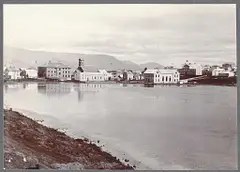
Arrived at Reykjavik at 4 o’clock this morning. Got up a little after seven. The scene when I came on deck was very beautiful. We were anchored in what seemed a bay though it was some distance up the fjord.
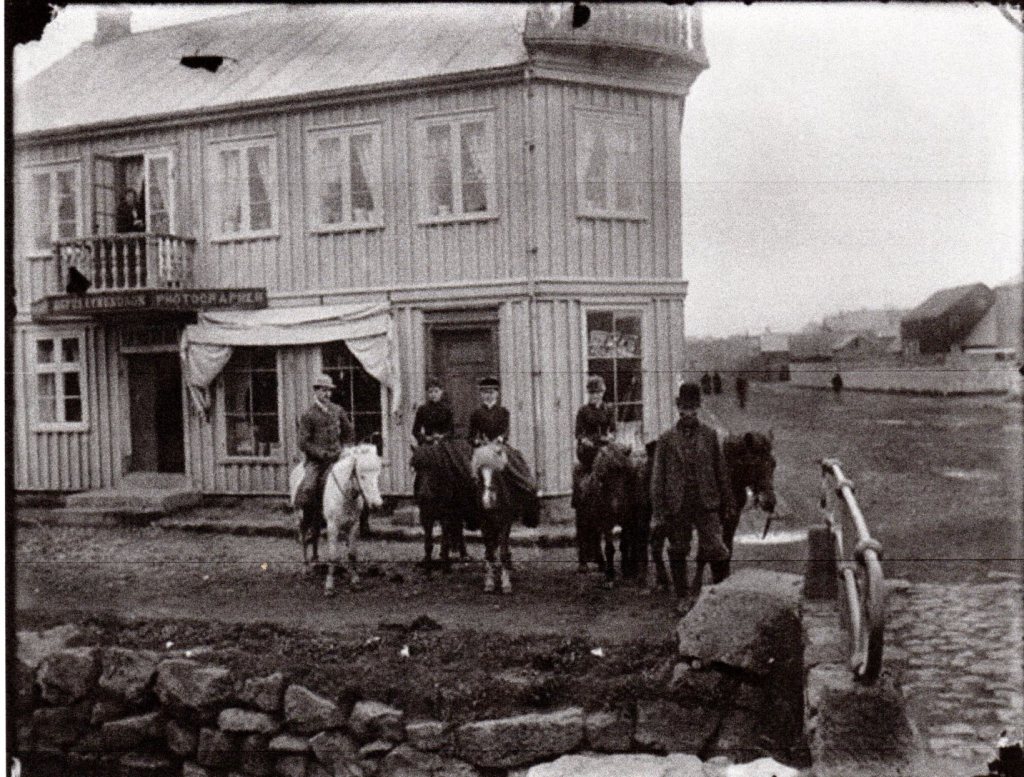
Right in front of us lay the town with its wooden sheds and houses sparsely intermixed with stone. In the harbour itself was a goodly number of larger and smaller crafts while right ahead lay a Danish and right astern a French Man-of-War. They looked beautiful in the still morning sunlight with every rope and spar so neat and trig. Just as I was looking at them, eight bells rung in the Danish vessel and the band played the National anthem. In a few minutes the Frenchman followed with his. I felt quite impressed. After breakfast we went ashore and proceeded 1st to Eymundsson. He is photographer, printer, bookseller and agent, a merry sided man.
SIDE NOTE:
(SigfúsEymundsson, a photographer and a bookbinder founded “Bókaverslun Sigfúsar Eymundsson” in 1872. In 1886 Sigfus founded Eymundsson publishing and in coming years he would publish many of Iceland’s poets, including Hannes Hafstein and Bólu-Hjálmar. Sigfus was the first to import typewriters and money safes. He was also the first Icelander to publish and sell postcards, using his own photos as material. In 1920 Eymundsson bought the house on Austurstræti 18. Today Eymundsson’s store still stands on this spot, in house built in 1960. Back to the diary quotes.)
“Mrs. Eymundsson and her nieces came in with coffee and light biscuits. Sir Wm. Williams and one or 2 others came in soon waiting to get guides to their several destinations. Eymundsson was very busy so Frances and I strolled round the town. We had a bottle or 2 of Danish beer in the Hotel. All the traffic is done by ponies, even in the Capital here I did not see a carriage. They strap boxes on the ponies backs and in this way go over the entire country. They do not carry much each and the equipage of a gentleman going to fish may consist of 20 of them. We learned that there were some hot springs in the neighborhood and I at once determined to see them. We could not however get ponies, so Frances and I got a boy as guide and set out on foot. It was a very heavy walk, after we left the road. Altogether we had not to go further than about 2 miles but I am sure it took us nearly an hour. The scene when we got there was lively enough. The place looked for all the world like a little hollow in a Scottish moorland with a burn running through it. Only in this case the burn was giving off large quantities of steam all along the course while here and there it rose in thicker volumes. All along its course were groups of women washing clothes. There must have been nearly 100 of them.
The women it seems carry their clothes out here and wash them in the naturally hot water. This saves fuel which in a country without a tree is a consideration. We tested the temp. of the water at various places and it was so hot that the hand could not be kept in it for even a second or 2. We had been instructed to get a cup of coffee from some of the women any of whom we were told would give it to us but we considered we had no time to lose, so after walking all about for a little we had to turn our backs on the strange scene. Came back to Eymundsson and had some more coffee, also Brandy and cigars. Looked over a lot of photographs and selected one or 2 but could not afford to buy as many as I could have wished. Find that Mrs. Eymundsson is going to accompany her husband to Scotland. All got on board and steamed away at 4 o’clock in afternoon. We now proceeded northwards along the coast. Looking towards the scenery was magnificent. Grand mountain peaks continuously with fjords passing up below and among them. They resembled somewhat the Loches and mountains of the Clyde, but on a very much larger scale. No doubt this scene was in the stewards mind as he recited Lord Ullin’s Daughter in the calm of the evening. Only there was no dark and stormy water, the water was beautifully clear and smooth and the ship steamed on almost without movement. We passed Snæfellsjökull 4500 ft. but it did not look nearly so high everything being on such a grand scale it was a pretty sight to see it standing well up with the snow half way to the crest. We found it very difficult to retire to our bunkers, it does not get dark at all at night in these latitudes. We have to draw curtains to get to sleep. It seems very funny going to bed at 12 or 1 in the morning in almost perfect daylight.
Thursday 5th July,
Still coasting. We reached the North Cape at 10 A.M. and Eymundsson took 2 or 3 photographs of it. Passed within the Arctic Circle Lat. 66.32 at 11.30. No one could think however that we were in the Arctic regions. The air is excessively clear and still. The water smooth as glass and the sun shinning brilliantly. The only sound comes from the ship with now and then the almost silent splash of a duck. The sea around is literally alive with these. They are small and dark and swam about in perfect shoals. The land lies about 2 or 3 miles off but appears just over the bulwarks. One can see great distances, indeed when standing well off shore you may see 50 miles. And how lovely the shore looks, bounded by immensely high, irregular rocks, some springing up in clusters of peaks and pinnacles, others built up shala by shala (does he mean shale?) like a prison wall and with flat table tops. The snow is lying all over in patches and is perfectly dazzling in the sunlight. Just a beam is a waterfall coming sheer down about 200 ft. into the water. So all appears to my eye, but how to the Captains. He listens gravely whilst I dwell on the grandeur of the landscape, the warmth amidst snow, the uncanny stillness of earth and air and sea and at the conclusion merely remarks, “But I fear it is all too still, there must be ice ahead.” Alas too true. Very shortly we began to encounter blocks of ice that floated silently astern. These at 1st in solitary pale green masses with pure white caps anon (?) in ever thickening groups until at about 12 o’clock the engines had to be stopped. The Capt. went to the masthead and had a look around but could find no path ahead. His instructions were to proceed round the North Coast if it were open, calling in at several fjords on the way, but on no account to risk the ship by getting her trapped in the ice. There was no help for it then and it was with deep sorrow that I heard the order to bout ship. The Capt. assured me however that though I had not got round the North I had got ample compensation in viewing the ice, a sight he said of a lifetime. And so it was. I went up to the main top to have a better view and indeed it was magnificent. Ice everywhere and to the eye not a pathway extending more than a quarter of a mile anywhere.“
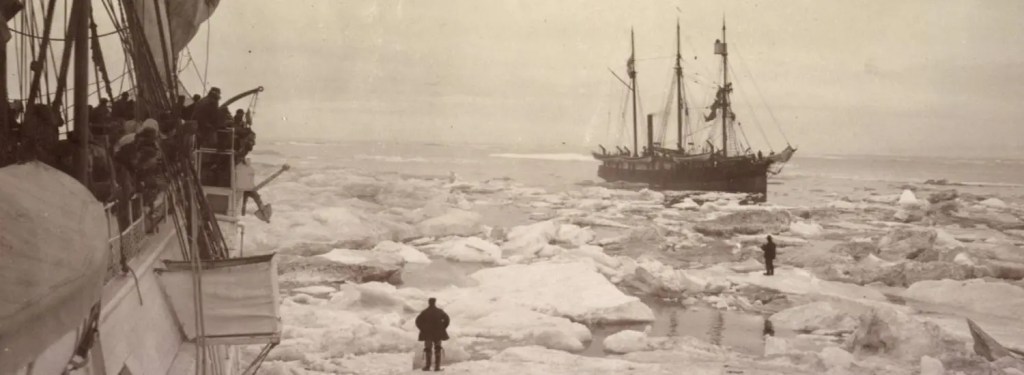
“When the engines were stopped the intense stillness was almost oppressive. One felt just in that way described as being alone in the awful vastness of nature and surrounded by unseen but tremendous powers. We looked awfully little there and our lives very small things indeed. While we were lying here in the stillness and the Capt. was deliberating what to do, hardly anyone spoke waiting for his decision. I was leaning over the rail furrit (?) of the bridge, when I became conscious of some great movement just in front of me. On looking attentively I saw an immense whale rise, snout first, close to me starboard bow and turn himself gently and silently over in the water. The Capt. assured me that he was not less than 60 ft. We had seen a great number of whale previously but always at a distance, this one I could almost have touched with a walking stick. I may say that some of the blocks of ice lying round the ship were estimated at as much as 500 tons. We all felt rather sorrowful as we steamed back on our old track, but all who knew anything about the matter agreed that no other course could have been pursued. Mr. and Mrs. Eymundsson, Frances and I had one of the little saloon tables brought up and we had a nice game of whist. The Icelanders play well. Mrs. Eymundsson especially is one of the best lady players whom I have met. It seemed funny playing Whist on deck in the Arctic regions with ice floating round and snow on the distant shore, but the sun was so warm and the air so still that we had not even to put on overcoats. We had a very nice evening in the saloon, toddy and songs I have not mentioned that one of our passengers, a large sheep farmer, Watson, was going round the while trip with us. So that he and Rowland an English chemist who came on board at Reykjavik were the only home passengers and they with Eymundsson, Frances and myself completed our party.
“Friday 6th July,
Have now passed the fjord up which Reykjavik lies, and are steaming southwards. About 11-15 passed the light house to the south of the east coast. It is only one on Iceland and is a pretty poor one at that, at least in appearance. It is very lopsided having suffered badly in a former earthquake. About 5-30 passed the Vestmannaeyjar islands again, hoisted the ensign and blew the whistle. Between 7:00 we are sailing along the South Coast in the midst of the most magnificent scenery I have ever seen. Masses of rock promiscuously placed standing out all along the foreground. Some of the masses miles long and all over 1,000 ft. high. All sorts of fantastically shaped islands are formed. Some bold broad and square. Others again stretching aloft in masses of peaks and pinnacles. Between and among these deep fjords, whilst away in the background, stretch 2 immense mountains over 5000 ft. in height and covered with snow. One of the flat topped islands with the wall like cliffs stretches away seawards for some miles and is pierced near its extremity by a natural arch through which a large ship may pass.“

“The above is something like the shape of the cliff with the arch, and pinnacle island in front. Some shapes of cliffs are in front with 2 large mountains behind. Before going to bed had a distant view of Oraefajokull the highest mountain in the island. Jokull means glacier. All these very high ones are glacier mountains and have a gleamy white almost opalescent appearance.
“Saturday 7th,
Awakened at 5 a.m. to see Oraefajokull. It appears to run right upwards and backwards from the water, though when the Captain mapped it out on his chart we found it to be 30 miles away. It is covered with snow and is in fact an immense glacier. I cannot describe the scenery as it appeared to me in the fresh morning. It was simply beyond description in the silence of its massive stillness, a stillness and grandeur which was quite a perceptible sensation. In the afternoon we turned into Seydisfjordur where we expected to get some emigrants.“
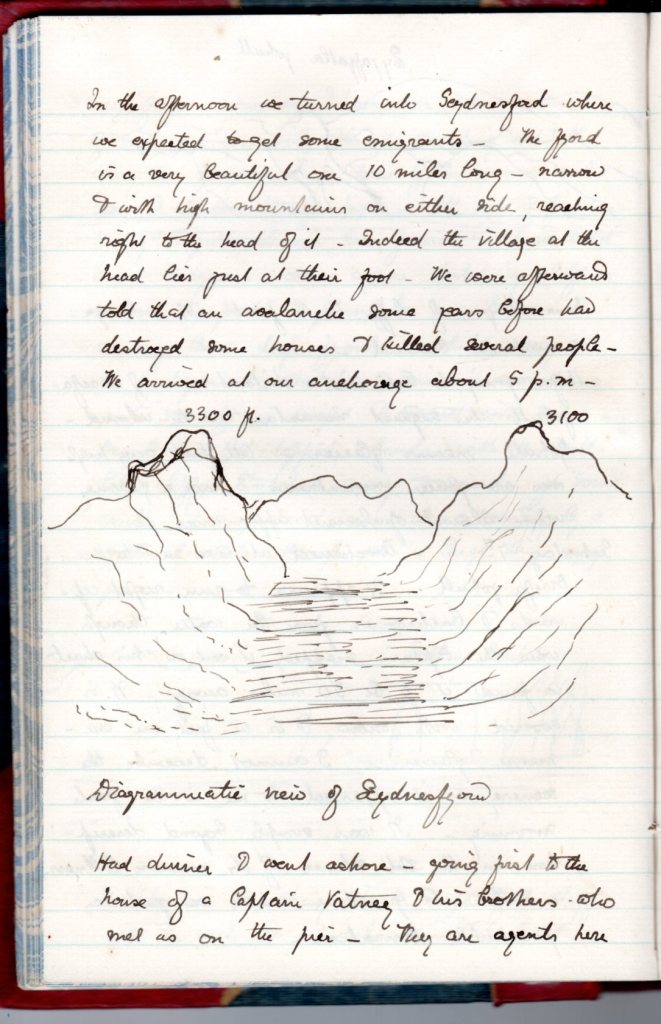
“The fjord is a very beautiful one 10 miles long, narrow and with high mountains on either side, reaching right to the head of it. Indeed the village at the head lies just at their foot. We were afterwards told that an avalanche some years before had destroyed some houses and killed several people.“
(SIDE NOTE: In 1885, an avalanche killed 24 people in Seyðis- fjörður. It is considered that between 75 and 80 people were caught in the avalanche, which damaged or destroyed around 16 houses.).
“We arrived at our anchorage about 5 p.m. Had dinner and went ashore. Going first to the house of a Captain Vatney and his brothers who met us on the pier. They are agents here for the emigration. The house was built almost out on the water close to the head of the pier and was a one storied straggling building made of wood. The Captain’s business room looked over the wharf and was indeed very suggestive of a shipper. A ship’s settee for sofa, and a ships basin arrangements with looking glass, rack, &c just as in a cabin. After business was transacted, young Vatney, France and myself strolled along to the hold. We could not get any whiskey or Danish beer, the only available thing was Schnapps, a dreadful sort of liquor of the strength of brandy, and the taste of peppermint. I bought a bottle for a crown, about a shilling. When we came out of the hold there were a good number of men standing around with ponies. I selected one and had a good gallop along the shore. Afterwards, having agreed with the owners we set out for a ride up the glen. It was very beautiful, the high mountains, perfect stillness and subdued daylight (our ride was from 9.30-11.30) the only sounds being those of the ponies hoofs, the waterfalls or our own seemingly loud and unnatural voices. The streams as we came to them we forded, the depth of water that these ponies could go through surprised me. Sometimes they were almost off their feet and we had to hold our feet high up on the saddle, even there the water came over our boots. My pony unfortunately had a distaste to water. At one stream in particular he would always turn. I forced him through it several times but on each occasion despite my endeavors he wheeled and went back again. Finally after one of these forced retreats, I wheeled him tightly around by the head and gave him a rather vigorous blow with my whip. An Iceland pony like any other I suppose does not like a tight head and a heavy whip so he reared straight up and then fell on top of me. I got down in soft ground and congratulated myself, was speedily up but felt it prudent to lead him over the stream and afterwards surrendered him to Vatney taking his. We reached the top of the water shed and had a beautiful view all along the glen but it was getting late and I had most reluctantly to tear myself away from the enchanting scenery. We got back to the Vatney’s about 12 o’clock, and were introduced to the ladies, exceedingly well bread and agreeable persons. The Chief steward had arrived and I could see had had too much whiskey. He was endeavoring to play and sing “Ye Banks and Braes” but was making a sore muddle of the playing at any rate. I managed to do the accompaniment and he got off creditably. We had some whiskey and then rowed off to the ship.
Some of the ladies came off too and we had quite a party in the saloon. I will admit however that I had just a little more than was absolutely necessary, enough to make me excessively polite. I showed the ladies about and wound up by kissing my hand to a lady whom I believed to be Miss Vatney but whom I afterward found to be Capt. Vatney’s wife. I am so short sighted but not seeing them again and could not explain. We kept it up in the saloon until about 2 A.M. when I came on deck and found we had just cleared the Fjord. It was still bright and clear as day.“
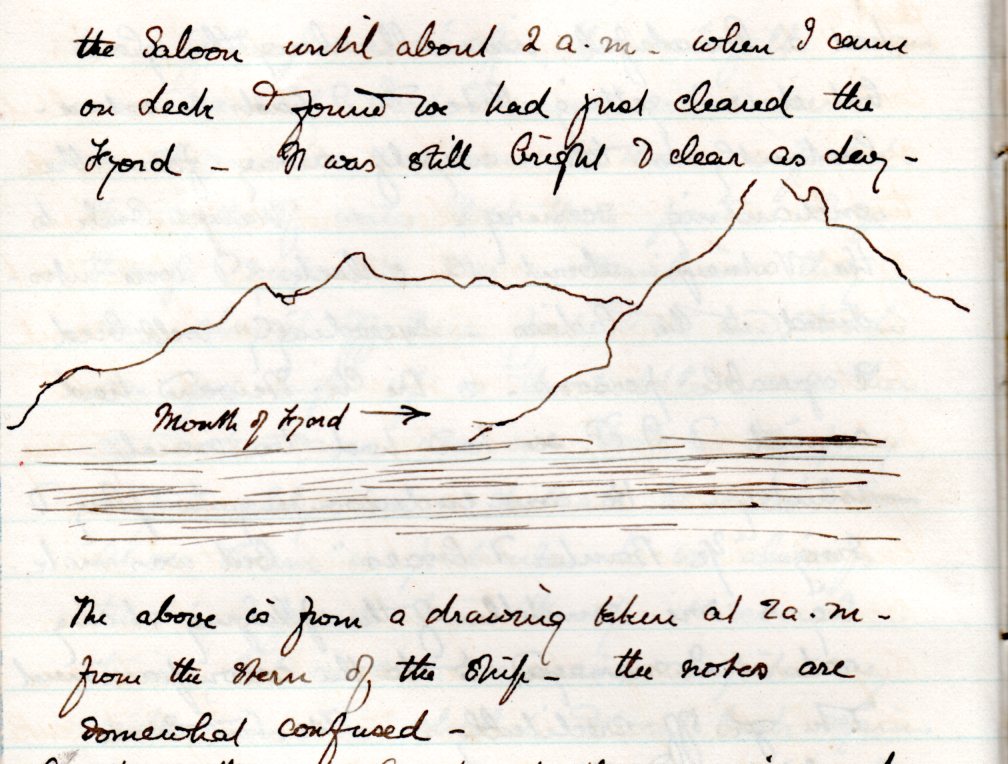
“The above is from a drawing taken at 2 A.M. from the stern of the ship. The notes are somewhat confused.”
“Sunday 8th,
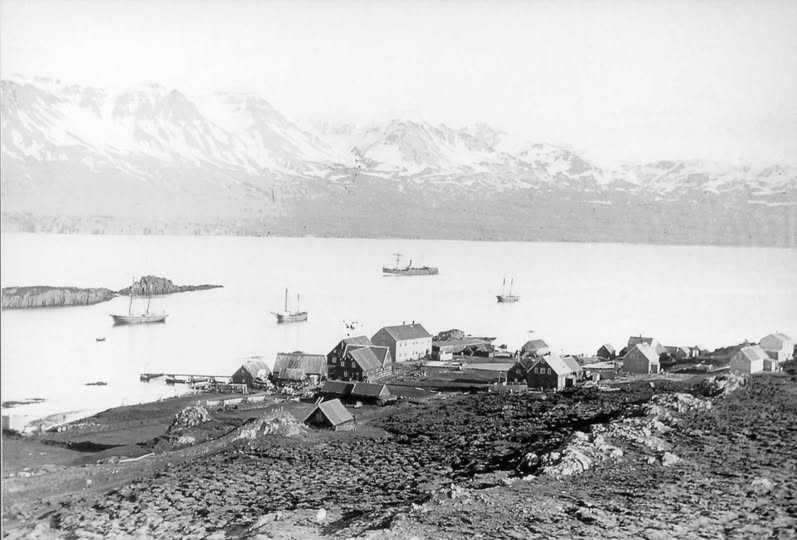
Awakened this morning at anchor in Vopnafjordur of which place I have a photograph. There is more pasture here, the ground being much flatter on one side where it stretches away over a kind of moorland to the next Fjord. Watson Rowland and I went ashore after breakfast and had a stroll through the village. It was much of the same sort as the others but what looked here exceedingly pretty were the turf enclosures, gardens and little plots of cropped land. The turfy walls surrounding these would be about 3 ft. thick and 4 ft. high, but the whole sides and top a continuous face of fine green turf. We walked away across the flat land lying between the two fjords and on the ridge had a fine view of the mountains on the other side of the Fjord in which one ship was lying. When we came back to the village we sought out the Hotel and had a bottle of Danish beer which I found very good. While having our smoke here there entered the room a half drunk native who excused himself in English but said in his disjointed way that he had been guide over some of the great glaciers to two English gentlemen and that of we would permit him he would so much like to talk English with us for a little. Like all such conversations with half or wholly drunk natives it soon became disagreeable. He was not at all an interesting man and besides he was suspicious and fancied always we wished to make fun of him. It soon ended in me asking him politely to retire, a request which he took in very bad grace. We went down to the jetty where the sheriff’s office was and Rowland and Watson went on board.I strolled up and down taking a look through our emigrants and especially the children. Some of them so huddled up that one could with difficulty get a look a their faces. While engaged in this duty I was again tormented by our friend the guide. He would come alongside me and speak. He was drunker than ever and more disagreeable. At last I lost patience and told him to hold his tongue and get out of that. He retired for a bit muttering “Hold my tongue, when I will.” No other people tried to get him off but he was apparently the bully of the place and no one could do anything with him. I was getting very impatient but did not want to make a row thinking it might detain the ship. I went in to the sheriffs and asked France how far I could go. I then learned that the same man had insulted the captain when he came ashore. I went out again and the man again interrupted me whereupon I turned on him and gave him some very crisp and strong English. This seemed to drive him wild but he retired and I did not see any more of him till just when we were leaving. The others had managed to get him off and it was probably fortunate as I was worked up to strike and he was pretty strong and agile as a cat in his movements. It was a most peculiar scene. The embarking of the emigrants, the clerks printing their bags with a piece of wood and a large bottle of ink in large black letters, “Winnipeg”, the farewells on the shore and the crowded boats pulling off slowly to the ship. We finally went on board at about 3.30 and found them making active preparation to sail at once. The Captain tells us that the night before has passed through about 25 miles of ice and he fears that the mouth of the Fjord may be blocked up by the time we get down, 10 miles. The ice he says has come down the East coast from the North so that it would have been impossible for us to get round the North coast. We sailed at 4 P.M. and were quite anxious till we saw the open sea. A large quantity of ice floated to the Eastward but one path was so far clear. Just now at 10 P.M. we can still see land and have been passing ice for 2 or 3 hours but the lumps are small and do no damage to us. The land is now dim but the sky above is beautifully clear. We can see now probably 100 miles of cost line, a continuous chain of mountain peaks. Perhaps with this scene, the grand silent mountain peaks in endless succession, the smooth topped rounded glaciers far behind, seen almost at midnight clear as in the day time. The silent sea around with the bobbing lumps of ice floating quietly along, all weird, mysterious and awe inspiring. We may never bid good-bye to Iceland and adjourn for some Schnapps. It is very cold.
In the saloon our whole company was gathered with the exception of Eymundson who had retired to bed. We were anxious however to bid fitting farewell to the land which he represented and could not do without him. As I knocked at the door of his berth I asked him if he would come and act as interpreter to a sick man. Obliging now as always he got up at once and dressed. He was a little annoyed for a moment when the ruse was explained but quickly got good natured and indeed seemed quite pleased at the attention we were about to show to his country and himself as representative. I was at the head of the table. Then there was Frances, Watson, Rowland, Eymundson and the steward. Frances made the speech of the evening and a rattling good speech it was. He spoke of the country, the inhabitants, the kindness that had been shown him by them, their intellectual greatness, their business capacities &c &c. A most excellent speech and in excellent taste. Eymundson almost wept while he spoke. Need I say the toast was enthusiastically drunk by us all. Eymundsson’s reply was very affecting. Mrs. E. must of course have been listening to the whole affair but as our indirection that she must have been well pleased we never had reason to know she was there. Of course the gallant Frances did not neglect the ladies. Songs and toasts followed and whiskey was swallowed hard.We broke up scarcely broken up about 2 A.M. The last I saw that night was Eymundsson now thoroughly into the business coming to my bunk with the bottle and a glass insisting on a farewell nip. Being full to the back teeth I was forced to decline but Frances was induced to have a sip, and then the virtuous Icelander retired with grave but uncertain steps to his own stateroom. The remainder of the voyage was uneventful. In 4 days we arrived at Granton. Coming through the Pentland Firth we had a terrible night, the worst I had ever experienced. When sleep until 4 in the morning was a physical impossibility.
(SIDE NOTE: I must tell you what happened to the SS Copeland. Just eight days after Alexander landed in Scotland the Copeland was back in Reykjavic Iceland to pick up a load of ponies and some passgeners. On July 20th she leaves Reykjavic but because of a brutal storm and fog so thick you could hardly see the front of the boat when standing on her deck, she wrecked on July 25th near the island of Stroma. It’s really and incredible account of what happened. You can read the full story on the following web site)
https://www.scottishshipwrecks.com/copeland/
(I also found an incredible video showing what Stroma looks like now. It use to be the home of several families but is now abandon.)
Well, Alexander is back home but that’s not the end of his adventures. There were a few extra pages in the back of the diary that covered two more trips on board ships, one in which he heads back to Boston and the other one to Canada. The entries aren’t as long as the ones above, in fact the one to Canada is just a few brief notes, but definitely worth sharing especially because of the great storm they encountered on the way to Boston. Let’s continue on as he returns back to Glasgow from his Iceland trip….
“We came to Glasgow by special train with all our people and I made my way home to Somerset Place. The latter half of July I was engaged doing Jame’s work and in August I did my father’s. I got along very well with the patients and did a good deal of work. Went in once or twice to Royal and on one occasion after Nurse McG.’s. Illness took her a drive out into the country by Alexandria Parade in the wagonette. This was one of the pleasantest drives I ever had. I was so glad to do a little service to the lady. In a few days she left for Ireland for holidays and I went down the length of Paisley but had to turn there in order to get back that night. Towards the end of my Locum work, I made application for a new ship. I wanted to take the first on which ever it was. This unfortunately happened to be the Waldensian and sailing for Boston where I had already been. However I took her to get soon away.”

“II Voyage to Boston. S. S. Waldensian, Captain Whyte.”
Wednesday 5th, Sept. 1888.
Sailed from Glasgow this morning. Made usual visit last night to Royal to say farewell. Government officers came at Greenock about 3 o’clock. Usual inspection. Two boats were lowered and rowed round ship. Rockets and bombs were sent up to test efficiency &c. Got away from Greenock about 8-30, awoke next morning off Moville. The weather during the night was most horrible and kept me awake for most of the early part. I mess with the Captain and purser, an improvement on Phoenician system. The Captain is an exceedingly nice fellow and talks well. 6th off Moville. Took on a number of intermediate and steerage passengers and sailed towards evening for Galway. Friday 7th, Passed most awful night. The ship rolled most horribly and the wind howled. Sleep was totally impossible from sheer mechanical difficulty. I thought at times I should be tossed out of my bunk. Everything seemed to be adrift both in my room and all over the neighborhood, from every quarter came the rattle of every conceivable movable. Every now and again I had to get up to fix things, and used up every soft article I could lay hands on to jam (?) things off except indeed my shirt &c which I found had got to the floor and was soaked. At one period my lower drawer was out on the floor and everything that could move was out too. To add to my other discomfort I felt quite squeamish. I ate a moderately good breakfast however. Have had rather a bad accident today. Fireman when coming up engine room ladder fell backwards striking his head on an angle iron. During my examination of the head he took a very bad convulsion and I got him hastily dressed and put in hospital where he took other 2 convulsions, the last one very severe. Livid, stertorous breaking and contractions mostly on one side of face. Could not find fracture by probe. Thoroughly cleaned the wound and dressed it. Good deal better tonight and quite sensible. Says he had a severe head injury 15 years ago after which he took convulsions but denies having had any fits of late. No pressure symptoms.”
Saturday 8th,
Woke up at anchor in Galway Bay and got up at 6 to receive the government officers from the tug boat which had been lying out all night. Dr. Rice not in quite such good spirits as the last time I saw him but no wonder after the night on the tug. Have now about 200 passengers. Kept my patients on board. This morning we present a typical post epileptic appearance. After taking in immigrants started westward and wish I could have got ashore at Galway. It looks a lovely place. The land on either side as one sails up is stony and desolate looking but at the top of the bar where the town is situated it looks green and fertile.
Sunday 9th,
Rather a good day. Attended service conducted by Captain in Intermediate. The sermon we read was one of Moody’s and a poorer discourse I never listened to. It was selected for its bearing on temperance. Notice, a very rich man had an only child whom he lavished with his affection. The father however sold liquor and how could he prosper. The only son sickened and died. Not only was the inference drawn but the fact was plainly stated that the child was taken from him on account of the nefarious traffic which he was engaged in. Could anything be more absurd or illogical. The sermon was full of such things and it disgusted me. They were false in their conclusions, therefore not honest but wholly unrighteous. The man who speaks them is distinctly a liar.
Monday 10th,
Weather fairly good. Number of passengers on deck, ship however rolling heavily, head case doing well.
Tuesday 11th,
Sea has got up during the night and the Captain says we are into the regular equinoctial gales rather earlier then usual.
“Friday 14th,
Weather has continued most severe. Almost all the passengers are down again. The night before last my room was flooded. A large green sea washed against the deck house, threw the alley way door open and knocking in the Steward’s door, filled his room with water thence it came to mine. It was horrible to hear the jibble jibble back and forward as the ship rolled. I have had no sleep for two nights. The steward came in to me in his flannels swearing badly. Everything in his room was wet and he was being tossed about. He did not get much sympathy. He went from me to the mess room and lay down on the settee, but at one of the lurches he was again thrown on the floor. So he bethought him to get dressed as there was apparently no sleep for him. The water was taken from my floor in buckets before I could get up.
Saturday.
Still no abatement and today is the worst of all. The water is washing over fo’castle in huge green seas sweeping the decks right to the bridge. It is a splendid sight to see her bow up down into the trough of the sea and then rise high upon the next wave. Have had a number of accidents today. Boatswain when coming up the stoke hole ladder was struck on the head by the iron gating at the top which one of the men had let go on him. He held on however and had time carried down below and he is suffering from concussion. Another man as knocked over and got a deep wound over the left eye, put in two stitches.
Sunday 16th,
Weather very much improved this morning. Sea is rapidly calming down. One can get along with some comfort. The sky too is clear and bright. My patients all doing well. Spent a lazy day. No service.
Monday 17th,
Woke this morning off Newfoundland. Land just about 3 miles off. It looks pretty desolate, not much vegetation. Away from the shore the ground stretches somewhat flatly. A number of vessels are in sight, fishermen and Yankee schooners. The weather is delightful, such a change from last week. The water is perfectly smooth and the ship does not roll at all. There is however a slight head wind. The male passengers are playing shovel board and the females swinging &c. as best suits them. Everyone seems to be enjoying himself thoroughly and the steerages &c below are quite empty.
Tuesday 18th,
Going along at a good rate. Fine weather continues. Are just opposite Halifax Nova Scotia (after breakfast). All day have had the land in sight. Hold a grand concert in evening. The intermediate was gaily decked out with lamps and flags. I was in the chair and upheld the office I make no doubt with singular grace. We had also a lot of songs from the steerage. The affair passed off very well. Everyone seemed to be delighted. Did not contribute myself. After the concert there was a small dance. The only instrument on board is a melodeon and the person owning it is not even very proficient so music was not up to much. It was better however than dancing to whistling. I tried a waltz but the lady, like most of the others, danced a quick doux temps which I could not get into. I afterwards danced a quadrille with Mrs. Anderson. Her calm magnificence I do not think the performance has ever been equaled. The four couples were I may say perfect in their knowledge of the figures. The darkness moreover encouraged just that amount of easy abandon which gave the necessary grace. For myself I kept a cigar lit all through and the amount of side with which I put the ___into my mouth or removed it, accordingly as the engineer of the dance or my own inclination impelled me, must have given infinite amusement to the onlooker. Altogether this has been the pleasantest day of the trip.”
Wednesday 19th,
Did not do much today. Wrote up my log preparatory to sending in my report at Boston
“Thursday 20th,
Land sighted. People all making preparation to land. Fumigated steerage’s and Intermediate in morning. Had left it rather long on account of bad weather. Closed all posts and hatchways and placed flakes of Chloride of Lime and Sulfur all along, then poured on acid sulph. Arrived off Quarantine ground at 4 P.M. Dr. Shay came on board and passed the ship and people for vaccination. On going over the papers however one was missing. We have a certain amount of rags on board and require a certificate that they are domestic and do not come from any infectious district. This certificate was not found so we were detained. It was very hard for us especially for some of the passengers, some of whom could almost see their houses, to be kept from landing. I have seldom heard such an amount of tall language as I heard from there.”
Friday 21st,
Passengers all landed early this morning, did not get up until about 8, found all on shore had a parade up and down the street. After breakfast began to think what I should do but could not settle. The sky began to look very black. I therefore strolled up into the town and had a look at some of the shops. Very heavy rain began to pour down. Here it seems to come in sheets. In a few minutes the street is a stream and “rubbers” are a necessity. Most of the people where them. I had brought my waterproof so did not much mind. My feet were however soon wet. Decided to go out to Dorchester and pay the Murdoch’s a visit. Had lunch and glass of beer and a smoke and took car. By the time I had got to the terminus about an hour, the rain had a good deal abated. I enjoyed the walk immensely. These Boston suburbs are lovely, it is quite country like. Trees grow very well and vegetation is luxuriant. There are no walls round the houses, not even in most circumstances a fence. The houses being planted down anyhow as it were. Saw Mr. Murdoch and the children. Miss Murdoch has gone to some employment in the city. Learned that she and her brother were going to a Panorama of the Battle of Gettysburg in evening. Came back to town by train about 6. Spent an hour in having something to eat &c. and then strolled along Tremont St. in search of Panorama. As usual in Boston was directed wrongly but this was very fortunate for as I was strolling leisurely along I just chanced to meet my two friends coming in opposite direction. Miss Murdoch’s surprise at meeting me so unexpectedly was very amusing. I secured a seat next to theirs. It was to commence at 8 and about 7-30 a brass band moved on to the stage just below us. To or horror the small drums took up a position just beneath. If the playing had been good I would not have minded but it just reminded me of a salvation band. They played a number of marches and amongst others the March to Georgia. Punctuality did not seem to be of much account in this band, 2 or 3 more drummers and a cornet player arrived 10 min. after the beginning. The Panorama consisted in the exhibition of a series of pictures illustrative of the 3 days fight, a running lecture being carried on all through. The lecturer was Gen. Mullholland. I took a dislike to the man. He was an Irish man apparently but I disliked his whole style and his lecture. The subject moreover did not impress me with anything like the strength it was apparently expected it should. In the interval of changing the pictures a quartet party of men sang a piece or 2 and there was also a performance on the organ. The vocal entertainment was exceedingly good but did not seem to be very highly appreciated by the audience. They gave far more applause to a boy of 17 who had volunteered a cornet solo. His playing to my mind was exceedingly ordinary but they demanded an encore. He gave “God save the Queen”, not as I understand, in fact, but a tune the same set to some American thing. Perhaps his playing was spoiled to me after the magnificent performances of the Bavarian band at the exhibition but I think I have heard as good from “Tuesday.” There was a very large audience and it seemed to me to be a good one. We left early that the Murdoch’s might catch their train and we were all glad. A more god forsaken performance I never attended. I am thoroughly sick of this American war.
Saturday 22nd,
Very tried this morning after so much unwonted exercise. Went up to town after dinner and looked around, came back to tea. Went up to town in evening with Chief engineer and bought a pair of half boots.
Sunday 23rd,
Dr. Bryden called this morning about 12 and persuaded me to go out a drive. Went by Beacon St. and other residential parts of the city. The houses in these good parts are very fine. Streets wide with a broad stretch of grass and trees in front. On a fine clear day such as this with the sun shinning brightly they look magnificent. Went as far as a place called Jamaican Plain to a gentleman’s house where Breyden had to see a horse. The good people here do not all have stables. They mostly stable out this ___Beacon herd one however, and a fine one too. The appointments were all good and the selection of buggies and carriages fine. The house had as usual no gate though there was a good piece of ground round about and the avenue would in Britain have been taken for a bye-road. Came back to ship about 3-30 and found that Miss Murdoch and David had arrived about half an hour before. They spent the evening with me and had a nice tea. I walked up to town with them again partly to try my new boots but the pegs in the soles hurt me sorely.
Monday 24th,
Went up to office in afternoon. Called on Mr. M. Kenzie a passenger at 156 Charles St. Met Mr. Murdoch and Miss Murdoch at Old Colony Nation. I went out with them to tea. Spent a very nice evening. Had some Whist and had to sing the song “Down Among the Dead Men” to the children. Mr. and Miss Murdoch came down to the station with me. For some reason we did not get train at station we expected and had to walk back to Ashmount Station. Walked down to ship. Forgot to mention that in forenoon went over with Breyden to “Bulgarian” a Leyland Liner lying at opposite side of dock. She is commanded by Captain Lisk, a Scotchman. Another Scotchman, Col. Stewart, Canadian, came in and a very fine looking trio they were. Had some whiskey and a smoke. Talk turned on American politics in which Breyden shone. He is excessively down on the Yankees just now but he knows them thoroughly. I do not know sufficient about the questions to state his opinions but I admire them exceedingly while he uttered them embellished as they were with a very unwonted strength of language. The Irishmen are trying just now to get the upper hand in the board schools as they are trying to get the upper hand in the state matters but he says it serves the Americans rightly for the support that they have given to the Irish in British politics. He says he hopes now that the Irish will turn and throttle them.“
This is where this part of the diary ends. Then one more page….
“S.S. Siberian. Sailed Oct. 27. _____ in getting of passengers. Smith, Craig, Artdreson and Mrs. Dron. Sighted Belle Isle Monday. Sailing up gulf Tuesday. Funeral. Wednesday. In sight of land on port side. High, bleak land covered with brush, wood and snow. White houses, green shutters. Two concerts on board. Thursday. Getting into river. On either side mountainous land covered with pine woods. Away on North the mountains are very high. Stacked with snow and of that intensely blue colour seen in Iceland and in pictures of Norway. Quebec in evening. Snow storm. Ashore. St. Louis Hotel. Patagonian giant, row, Craig on board, Mrs. Dron. Friday. Sailed from Quebec in forenoon. In morning went up to Citadel. Banks low, pine woods and white houses. Stopped at night. Saturday arrived Montreal 3-30. Albion Hotel.”
Wow, what an adventure we have been on, thanks to Dr. Dunlop. I want to share what happened to Alexander after all of this. He ended up working as a ships surgeon for a few years, the rest of 1888 and 1889. He then received the appointment of Medical officer to the Parish of Arrochar and remained there 7 years. He also held the appointment of Surgeon to the West Highlands Railway in 1896 and finally worked with his father John who had his own practice there in Glasgow. He met Agnes Grimley and in 1900, the two were married. The couple gave birth to their first daughter Mary in 1901. Agnes then gets pregnant with their second daughter and during her pregnancy, her precious husband, Alexander, our author, passes away on July 18th, 1903. Their daughter Alexandra Watson Dunlop, his name sake was born in 1904, about 7 months after her father’s death. Alexander never got to meet his daughter, how very sad. I’m not sure how he passed away but it must have been suddenly. And remember in Part I where he said, “For a longtime I have been considering that a short, sketchy history of my doings written at this time would be very interesting to me as a man of fifty, if I am destined to live to that age.” Alexander died at the age of 41 years old, never making it to the age of 50. On our podcast web site diarydiscoveries.com Part 4 of Dr. Dunlop’s Scotland, I have shared more family photos which you might enjoy. I’ve shared that link below.
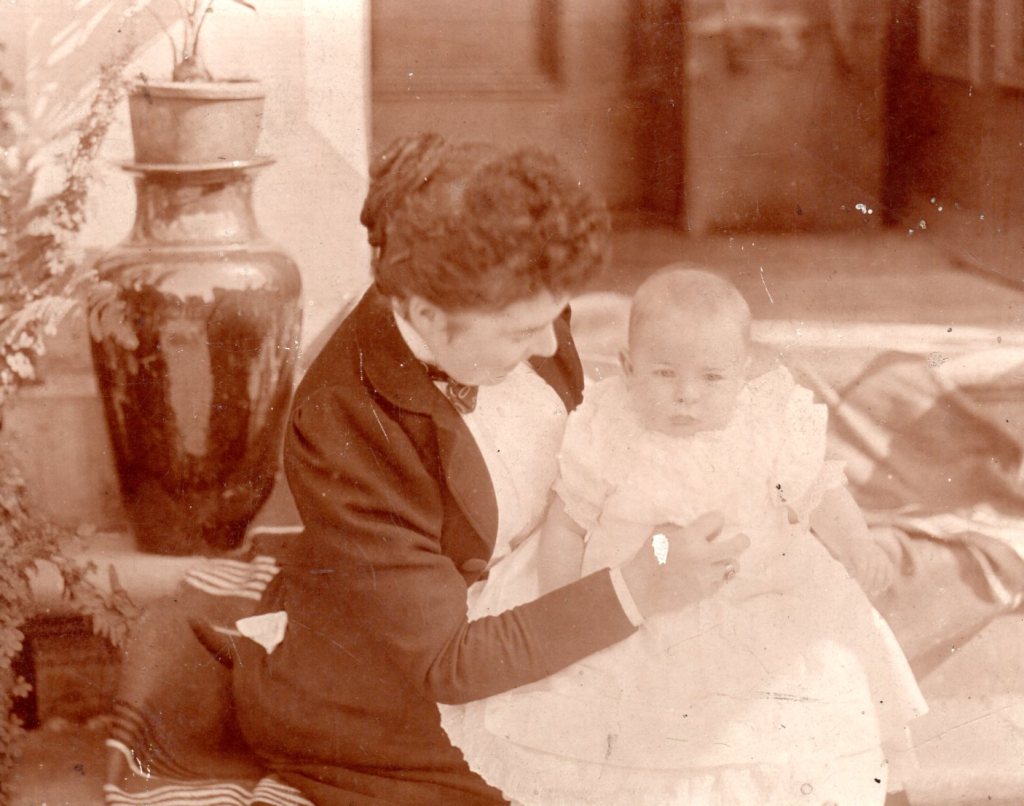
Thanks for going on this journey with me and I sure hope you enjoyed it as much as I have.
To hear this episode on our Diary Discoveries Podcast, clink the link below:
To See More Photos (including photos of family) about Part IV, click the link below:


[…] Dr. Dunlop’s Scotland Pt. 4 “Surrounded by Unseen But Tremendous Powers.” 1888 […]
LikeLike